
Google AI Search Optimization Guide 2026: Official Best Practices
On May 15, 2026, Google published its first official guide to optimizing for AI Search - covering AI Overviews and AI Mode. This article synthesizes the full official content and pulls out what you actually need to do (and what you can stop worrying about). Sources: Google Search Central Blog, the official documentation, and Google’s official LinkedIn announcement.
The SEO world has been flooded with terms like AEO (Answer Engine Optimization), GEO (Generative Engine Optimization), and endless “AI Search hacks” - but Google has finally spoken clearly. The short answer: most of it isn’t necessary. What actually matters is the same foundational SEO you already know, plus one core factor that AI makes more important than ever: content only you can write.
How Google AI Search Actually Works
To optimize correctly, you need to understand the two core mechanisms powering Google’s AI Search:
RAG (Retrieval-Augmented Generation) - also called “grounding”: the AI doesn’t generate answers from its training data alone. Instead, it uses Google’s existing Search ranking systems to retrieve relevant web pages, reads the actual content from those pages, and synthesizes a response - with clickable links back to the sources. The implication: if your page is indexed and ranking in traditional Search, it’s already in the pool for AI responses. Put simply: if you can rank on Google, you’re already in the AI game.
Query Fan-out - when a user submits a query, the AI automatically generates a set of related sub-queries to gather more data. For example, “how to grow a blog audience” might fan out into “what is on-page SEO,” “content pillar strategy for blogs,” and “best publishing frequency for ranking.” This means your page can appear in AI responses for queries you never explicitly targeted - as long as your content is topically close enough to the original query.
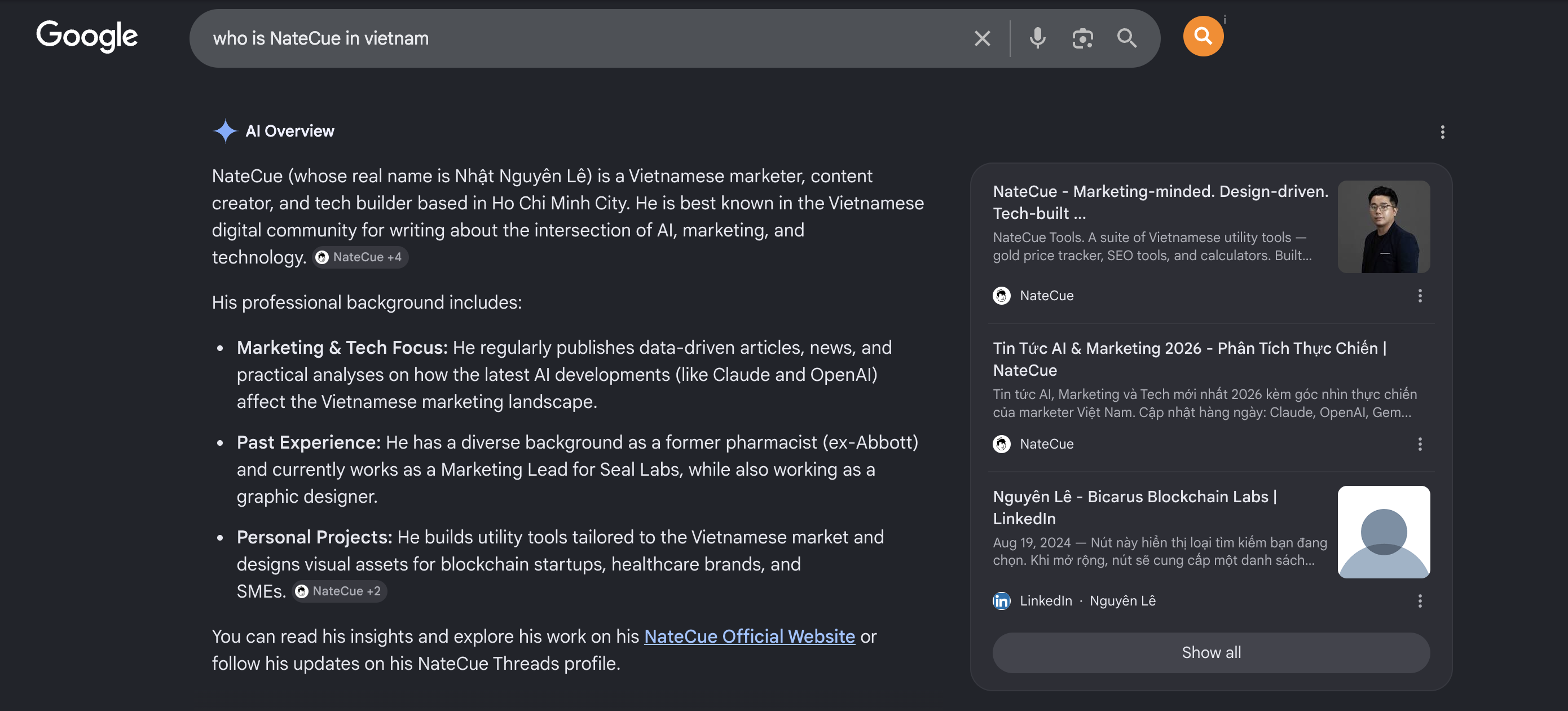 AI Overviews synthesize answers from multiple sources and display clickable links back to the original pages - RAG is the mechanism running behind the scenes.
Is SEO Still Relevant?
Yes - SEO is still essential. Google is explicit in the guide: optimizing for AI Search is optimizing for Search. There is no separate strategy.
The reason: Google’s AI features (AI Overviews, AI Mode) are built on top of core Search ranking systems. A page that’s well-indexed and ranking in traditional Search is a page with a real chance of appearing in AI responses.
Google also addressed AEO and GEO directly: “From Google Search’s perspective, optimizing for generative AI search is optimizing for the search experience - and thus still SEO.”
Real-world data backs this up. I’ve been tracking AI Search traffic to my own site and shared the findings on LinkedIn - Does AI actually bring traffic?
 Looker Studio dashboard tracking AI Search traffic - real data from a personal website.
The #1 Factor: Non-Commodity Content
This is the point Google emphasizes most throughout the entire guide. Content falls into two categories:
| Commodity Content | Non-Commodity Content |
|---|---|
| ”10 Ways to Write Better Headlines" | "I Tested 47 Headlines on the Same Post Over 3 Months - Here’s What Actually Worked” |
| Common knowledge - anyone could write it, including AI | Real data + personal experience - only you have it |
| Easily generated by AI | Impossible for AI to replicate |
What makes content non-commodity:
- A unique point of view: AI pulls from many sources, so content with a distinct perspective stands out. First-hand reviews, personal analysis, real case studies.
- Goes beyond common knowledge: Don’t just summarize what’s already on the internet or what an AI could generate. Bring something only you know.
- Written for humans: Clear structure, short paragraphs, logical headings. Add high-quality images and video where relevant - AI Search can surface visual content too.
Google’s litmus test: “Would visitors feel satisfied after reading this?”
Technical SEO - The Unchanged Foundation
Google maintains the same technical requirements for AI Search - nothing new here:
- Pages must be indexed and eligible to appear with a snippet. No special requirements for AI.
- Crawlability: Google’s AI models use publicly crawlable content. If Googlebot can’t read your page, neither can the AI - this is especially critical for web apps that prioritize performance and may inadvertently block crawlers.
- JavaScript SEO: Google can render JS, but sites built on JS frameworks require extra attention to optimize correctly.
- Page experience: Mobile-friendly, fast loading, clear separation of main content from other page elements.
- Reduce duplicate content: It wastes crawl budget and creates a poor user experience.
 A page that’s well-indexed in traditional Search = a real chance of appearing in AI Overviews. No separate strategy needed.
What You Don’t Need to Do
This is Google’s official myth-busting section - and arguably the most useful part of the entire guide:
1. llms.txt files: Don’t bother. Google does not process this file in any special way. It is not a ranking signal. This matters because many SEO tools are now selling “auto-generate llms.txt” as a feature - that’s money in the bin. If you’ve paid for it, stop.
2. “Chunking” content: No need to break your articles into tiny AI-digestible pieces. Google’s systems understand multiple topics on a single page and surface the relevant section per query. A well-structured long-form article still outperforms content artificially carved up by formula.
3. Rewriting content for AI: AI understands synonyms and general meaning. You don’t need to stuff in every long-tail keyword variation or write in some “AI-friendly” format. Writing naturally for real readers is the strongest quality signal - for both humans and machines.
4. Chasing fake “brand mentions”: Paying for brand mentions across blogs, forums, and videos is less effective than it sounds. Spam filters still apply to both AI features and traditional Search. Guest post farms and link schemes are penalized exactly as before - AI changes nothing about that.
5. Over-investing in structured data: Schema.org markup is not required for AI Search. Keep using it for rich results eligibility, but don’t treat it as the key to AI visibility.
6. Creating pages for every query variation: This is scaled content abuse under Google’s spam policy. AI systems are sophisticated enough to understand relevance without an exact match between the query and the page’s primary topic.
Local Business and Ecommerce
If you have products or a local business:
- Google Merchant Center feeds help product listings surface in AI responses
- Google Business Profile puts your local business information into AI answers - this is the most immediately actionable section for brick-and-mortar businesses
- Business Agent (new): a conversational experience on Google Search that lets customers “chat with your brand”
AI Agents - The Trend to Watch
Google dedicates a small but notable section to AI Agents - autonomous systems that complete tasks on behalf of users (booking reservations, comparing products, making purchases…).
Browser agents can:
- Analyze visual renderings (screenshots) of your website
- Inspect DOM structure
- Read the accessibility tree
Universal Commerce Protocol (UCP) is an emerging protocol that will allow Search agents to perform more complex transactional operations. Google recommends reviewing the “agent-friendly website” guide if it applies to your business type - see also Agent Readiness: How to Optimize Your Website for AI Agents (2026).
Takeaway: Accessibility and clean DOM structure matter more going forward - not just for human users but for AI agents too.
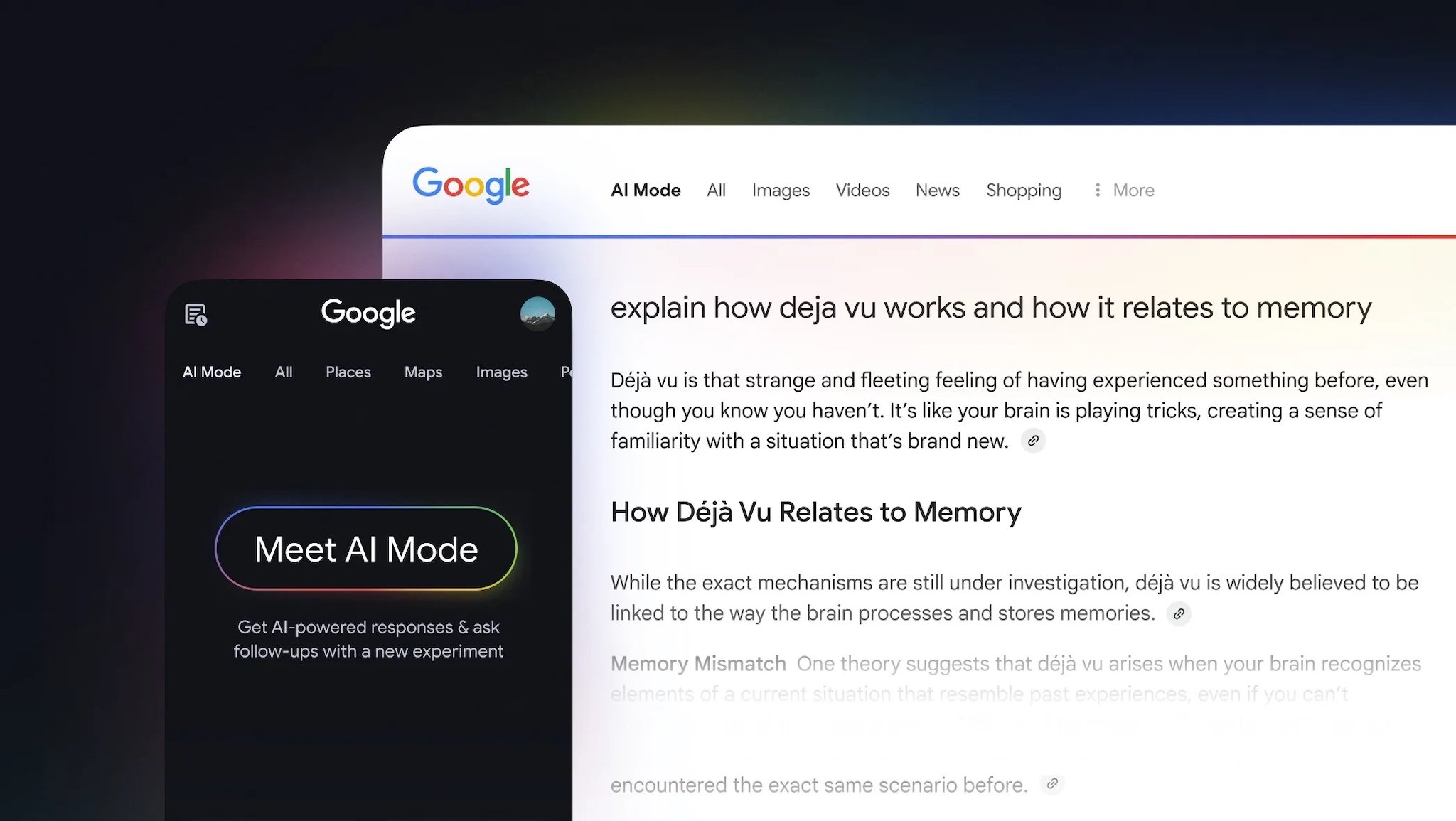 AI Mode replaces the entire SERP with a chat-based AI interface. Good SEO = visibility in both AI Overviews and AI Mode. Source: Google Blog.
Frequently Asked Questions (FAQ)
What's the difference between AEO and GEO?
Conceptually, AEO (Answer Engine Optimization) focuses on appearing in direct answers, while GEO (Generative Engine Optimization) focuses on being cited by AI. Google Search makes no distinction between the two - according to Google, both are simply SEO applied to an AI Search environment.
Do I need to create an llms.txt file for AI to read my site?
No. Google is explicit: llms.txt is not processed in any special way. Google may crawl and index many types of files on a website, but that doesn’t mean those files receive special treatment in ranking or AI responses. This is one of the most common misconceptions Google has officially corrected.
How do I know if my pages are selected for AI Overviews?
There’s no guaranteed way. Google is clear: even if a page meets every technical requirement and policy, indexing and serving are not guaranteed. The best approach is to focus on content quality, monitor technical health via Search Console, and track impressions in GSC over time.
Should I write different content specifically for AI Search?
No. Google’s recommendation: “Write content for your human audience, not for AI.” AI systems are capable of understanding good content regardless of whether it’s formatted for them. If visitors find it satisfying, AI systems are designed to surface exactly that kind of content.
Summary
Google’s official 2026 AI Search guide delivers a clear message: there is no separate strategy for AI. SEO remains the foundation; non-commodity content is the differentiator. In a world where AI can generate infinite generic summaries, the only thing that can’t be replicated is your genuine perspective, experience, and expertise. Stop chasing AEO/GEO hacks - invest in content that only you can write.
Related
- GEO (Generative Engine Optimization) 2026: SEO Strategy for the AI Search Era
- E-E-A-T Signals Explained: How to Make Google Trust Your Website
- Zero-Visit Visibility Strategy: How to Win in AI Search Without Getting Clicks
- What is SERP? Every Search Engine Results Page Component Explained
- Blog Article SEO Checklist: Everything You Need Before Publishing