
FOMO in Marketing: Why Fear Drives More Purchases Than Discounts
Two offers. Same product. Offer A: “Buy now and get 20% off.” Offer B: “Don’t miss out - this price ends in 3 hours.” Which one converts better? In most A/B tests, the second one wins - even though the discount is identical. This is FOMO at work.
Fear of Missing Out is not a millennial anxiety or an Instagram problem. It is a fundamental psychological mechanism that has shaped human decision-making for thousands of years. And it is one of the most consistently powerful triggers in marketing - when used correctly.
Most brands use FOMO clumsily. Fake countdown timers. “Limited stock” on products that never sell out. Urgency so manufactured it has become noise. This article is about the real psychology - and how to apply it in ways that actually hold up.
What is FOMO in Consumer Psychology?
Fear of Missing Out (FOMO) in consumer psychology is the anxiety and disappointment we feel when we perceive ourselves as excluded from activities, opportunities, or experiences that others are participating in.
The behavioral definition: we feel anxious and disappointed at not being part of activities that others are participating in.
But FOMO is the surface layer. The deeper mechanism is Loss Aversion - a concept from Nobel Prize-winning behavioral economists Daniel Kahneman and Amos Tversky.
Their landmark 1979 Prospect Theory research demonstrated a fundamental asymmetry in how humans process gains and losses:
Pain of losing $100 = ~2x the pleasure of gaining $100Losses feel roughly 1.5 to 2.5 times more painful than equivalent gains feel good. This is not logical. It is biological - our brains evolved in environments where losses (food, shelter, safety) were often fatal, while equivalent gains were just nice to have.
In marketing terms: the fear of losing an opportunity motivates action more powerfully than the desire to gain the same thing.
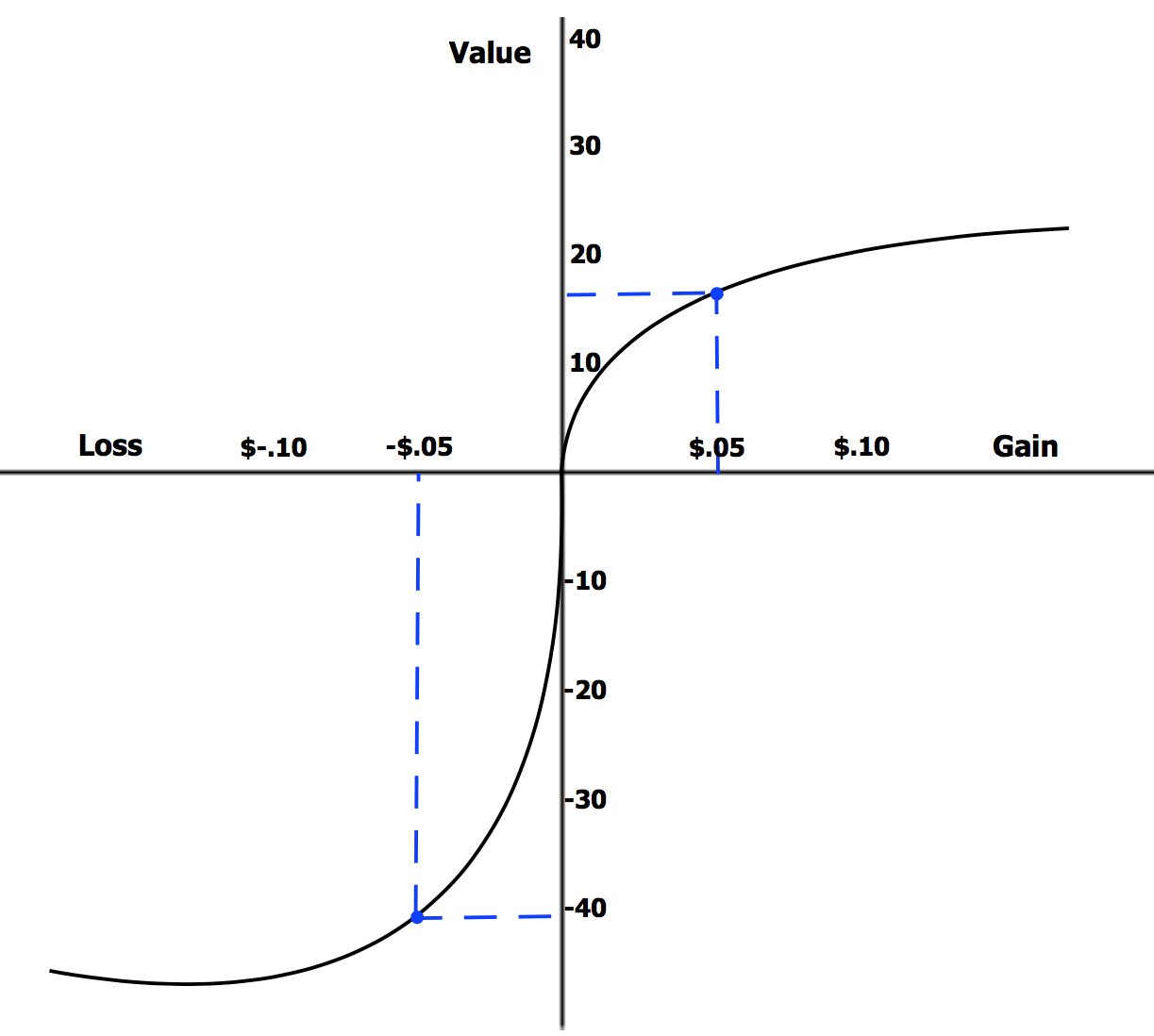 Kahneman & Tversky’s Prospect Theory (1979): the value function is steeper for losses than gains. This asymmetry - losses feeling ~2x more painful than equivalent gains feel good - is the psychological engine behind FOMO. Every countdown timer, every “limited stock” badge, activates this curve. Source: Wikipedia
The Psychology Behind FOMO
System 1 Activation
FOMO bypasses rational evaluation (System 2) and triggers immediate emotional response (System 1). A countdown timer, a “only 2 left” badge, or a “this offer expires tonight” message creates a threat response - not a rational cost-benefit analysis.
This is why FOMO works even when people know it’s a marketing tactic. Knowing the timer is there doesn’t eliminate the anxiety. The emotional response fires faster than the rational override.
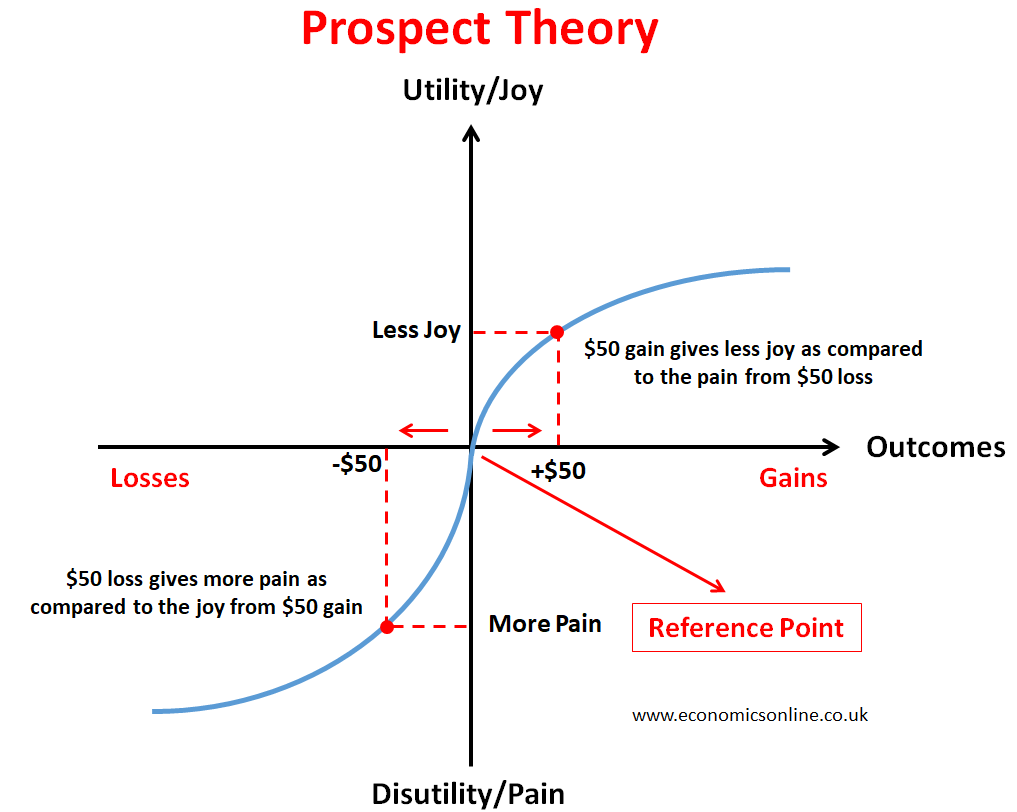 System 1 (fast, automatic, emotional) responds to FOMO triggers before System 2 (slow, rational) can intervene. A countdown timer fires the threat response before the cost-benefit analysis even begins. This is why people act on urgency they consciously recognize as manufactured. Source: Economics Online
Social Comparison
FOMO is amplified by social visibility. When we see others experiencing something we’re missing - a concert, a product launch, a community - the loss feels more concrete. We’re not just missing out in the abstract. We can see what we’re missing.
This is why social media has amplified FOMO’s marketing power. People are now constantly visible to each other’s experiences. Every unboxing video, every product review, every “just bought” post creates a visible crowd that others feel excluded from.
Reference Group Alignment
FOMO is stronger when the “in-group” we’re being excluded from is a group we aspire to belong to. Missing out on a luxury brand sale feels different from missing out on a fast-food promo - even if the monetary value is similar.
FOMO in Vietnamese Marketing - Real Examples
Thegioididong Flash Sales
Thegioididong’s promotional campaigns are a textbook application of FOMO mechanics. Their flash sale messaging is structured around threat-first communication: stock is running out, the window is closing, others are buying now. The banner communicates urgency before it communicates value.
This sequencing is deliberate. The fear of missing the deal activates purchase intent faster than the deal specification itself. You decide to act before you consciously calculate whether the discount is worth it.
Black Friday / 11.11 / 12.12 Shopping Events
The entire architecture of major e-commerce sales events is built on FOMO:
- Time limit: starts and ends at a specific moment
- Stock limit: best items sell out first
- Social visibility: millions of people participating simultaneously
- Early access: some people get in before others (exclusivity within FOMO)
Shopee and Lazada have made these events into cultural moments because they reliably activate FOMO at scale.
Limited Edition Product Launches
Nike limited drops. McDonald’s McRib return. Highlands Coffee seasonal drinks. The product isn’t necessarily better than the regular lineup - but its temporary nature makes it feel more valuable.
Scarcity = increased perceived value. This is FOMO-driven economics.
What Marketers Get Wrong
Fake Scarcity = Long-term Brand Damage
The most dangerous misuse of FOMO is manufacturing urgency that isn’t real. Countdown timers that reset when they hit zero. “Only 3 left” on products with unlimited inventory. “Offer expires tonight” emails sent every night.
Short term: people feel urgency and may convert. Long term: people learn they can’t trust your urgency signals. The FOMO effect stops working. Worse, it signals that your brand is manipulative - which erodes the trust that makes all marketing work.
Real data: Klaviyo’s 2023 analysis found that authentic scarcity (real stock limits, real time windows) outperformed manufactured scarcity by 34% in click-through rates over a 6-month period.
 Loss-framing captures attention faster than gain-framing - but only authentic constraints sustain that attention over time. When customers discover urgency is fake, the signal reliability collapses. Brands that abuse FOMO train their audience to ignore urgency entirely. Source: Wikipedia
FOMO Without Specificity
“Limited time offer” is weaker than “ends May 10 at 11:59 PM.” The more concrete the threat, the stronger the response.
“Only a few left” is weaker than “Only 7 left in stock.” Numbers create tangibility.
Urgency Without Relevance
FOMO doesn’t work if the person doesn’t care about the thing they’re supposedly missing. Pushing urgency on a product the customer has no interest in just creates noise and trains them to ignore your urgency signals.
Segment first. Apply urgency to audiences with demonstrated interest.
How to Apply FOMO Ethically and Effectively
Real scarcity signals:
- Actual stock counters (pull from inventory data)
- Cohort-based enrollment (“next intake opens in 14 days”)
- Event-based deadlines (the event happens, the offer genuinely ends)
- Capacity limits (only 20 seats in a workshop)
Social exclusivity:
- Early access for email subscribers or loyal customers
- Community-only pricing or features
- Waitlist mechanics that create perceived demand
Time-based without lying:
- Seasonal offers (genuinely tied to a season)
- Flash sales with real start/end times
- “This week only” promotions that actually change next week
Behavioral triggers:
- “X people are viewing this right now” (real data)
- “Sold out last time in 48 hours”
- “Join 500+ people who grabbed this before the price increase”
NateCue Take
Here’s my actual position: FOMO is the most overused and most abused lever in Vietnamese e-commerce marketing, and it has created a generation of customers who are desensitized to urgency signals.
Every shop on Shopee screams FOMO. Every flash sale uses the same countdown timer. The noise is so loud that the signal has become meaningless.
The brands that will win with FOMO in 2026 and beyond are the ones that create real reasons to act now. Real scarcity. Real exclusive access. Real communities people genuinely want to be inside.
The most powerful FOMO isn’t “this deal ends at midnight.” It’s “this community, this conversation, this access - you either have it or you don’t.” Identity-based exclusivity outlasts inventory-based scarcity every time.
Build something people genuinely don’t want to be excluded from. Then FOMO takes care of itself.
Frequently Asked Questions
What is the difference between FOMO and scarcity in marketing?
Scarcity is a condition - limited supply, limited time. FOMO is the emotional response that scarcity triggers. You can have scarcity without FOMO (if no one cares about the product) and you can engineer FOMO without literal scarcity (through social visibility, community access, or identity-based exclusivity). In practice, the strongest FOMO campaigns combine genuine scarcity with high relevance to a specific audience’s aspiration.
How does loss aversion relate to FOMO in consumer behavior?
Loss aversion is the underlying mechanism; FOMO is the experienced feeling. Kahneman and Tversky’s Prospect Theory shows losses feel ~2x more painful than equivalent gains feel good. FOMO is what happens when that asymmetry is triggered by a specific situation - a deal ending, a product selling out, a community filling up. Marketers activate loss aversion by making the potential loss concrete, visible, and time-bound.
Does FOMO marketing work for B2B as well as B2C?
Yes, but the mechanism looks different. B2C FOMO is typically discount- and stock-based. B2B FOMO is more commonly identity- and community-based: “Your competitors are already using this tool,” “This cohort closes Friday,” “Join the 300+ marketing leaders who already have access.” B2B buyers are still human and still experience loss aversion - they’re just more sensitive to professional identity signals than to retail countdown timers.
What's the fastest way to implement FOMO without damaging brand trust?
Start with real constraints you already have. If your workshop genuinely has 20 seats, say so. If your next cohort opens in 14 days, say so. If your inventory is actually limited, show the real number. Real scarcity, honestly communicated, creates more durable urgency than any manufactured countdown. If you have no real constraints, create structural ones - limited early-bird pricing, capacity-capped events, waitlist-first access - and honor them exactly as communicated.
TL;DR
- FOMO works because of Loss Aversion: losses feel ~2x more painful than equivalent gains feel good (Kahneman & Tversky)
- It activates System 1 (emotional, automatic) before System 2 (rational) can override it
- Fake scarcity damages brand trust over time - use real constraints
- The strongest FOMO is identity-based (belonging to a group) not just discount-based
- Pair urgency with specificity: concrete numbers and dates beat vague “limited time” language
- Segment before applying urgency - FOMO only works on people who already want what you’re offering
Related
- Bandwagon Effect: Why 'Everyone's Doing It' Is Your Most Powerful Marketing Signal
- The Framing Effect: How You Present Information Changes What People Decide
- Mere Exposure Effect: The Neuroscience Behind Why Familiar Brands Win
- Perceived Value in Marketing: The Psychology Behind Willingness to Pay
Part of the NateCue Marketing Psychology Series - applying consumer psychology to real marketing decisions.