
The Framing Effect: How You Present Information Changes What People Decide
“95% fat-free” and “5% fat” describe the exact same yogurt. But in consumer testing, the first version consistently generates higher purchase intent, higher willingness to pay, and more positive taste ratings - even in blind tests where the yogurt is identical. The product didn’t change. The frame did.
The framing effect is one of the most practically useful concepts in consumer psychology for anyone writing copy, designing pricing pages, or building marketing communications. It’s not about tricking people. It’s about understanding that the human brain doesn’t process facts neutrally - it processes facts through the lens of how those facts are presented.
Master the frame, and you change what people decide without changing what you offer.
What is the Framing Effect?
The framing effect is a cognitive bias where people’s decisions are influenced by how information is presented, not just by the information itself.
The behavioral definition: our decisions are influenced by the way information is presented - not just by the information itself.
The foundational research comes from psychologists Amos Tversky and Daniel Kahneman. In their 1981 “Asian Disease Problem” experiment, participants were told about a disease expected to kill 600 people and asked to choose between two public health programs:
Group A (gain frame):
- Program A: 200 people will be saved
- Program B: 1/3 probability all 600 will be saved, 2/3 probability no one will be saved
Group B (loss frame):
- Program A: 400 people will die
- Program B: 1/3 probability no one will die, 2/3 probability all 600 will die
The outcomes are mathematically identical. But Group A chose Program A at 72%. Group B chose Program A at only 22%.
The frame - gain vs. loss - completely reversed the dominant choice. Same facts. Same math. Different presentation. Opposite decisions.
 The framing effect in action: identical outcomes, opposite decisions depending on how information is presented. Kahneman and Tversky’s 1981 research established that this isn’t a quirk - it’s a reliable, predictable feature of human cognition. The same product, priced and described differently, produces measurably different purchase behavior. Source: Wikipedia
The Core Principle: Gains vs. Losses
The framing effect is most powerful along the gain/loss axis:
- Gain frame: Emphasizes what you get. “Save 500,000 VND this month.”
- Loss frame: Emphasizes what you avoid losing. “Don’t lose 500,000 VND to [problem].”
Because of loss aversion (losses hurt ~2x more than equivalent gains feel good), loss frames often generate stronger motivation to act - especially for purchases designed to prevent a problem.
But gain frames work better in other contexts - particularly when the product is aspirational or when the audience is already in a positive emotional state.
The key insight: you don’t have to pick one and hope for the best. You can test both, and you can use different frames at different stages of the customer journey.
The Framing Effect in Action - Real Examples
The Economist’s Subscription Trick
Behavioral economist Dan Ariely documented this in his book Predictably Irrational. The Economist once ran a subscription page with three options: web-only at $59/year, print-only at $125/year, and print + web at $125/year (same price as print alone).
When Ariely ran this by 100 MIT students, 84% chose the print + web combo - the $125 bundle felt like an obvious deal compared to the print-only option at the same price. Without the print-only decoy, only 32% would have chosen the bundle.
The actual price didn’t change. What changed was the reference point for what looked like value. The print-only option exists not to sell print subscriptions - it exists to make the bundle look like a deal.
 The framing effect operates through reference points: value is never assessed in isolation, always relative to context. The Economist’s decoy pricing works because the reference point (print-only at $125) makes the bundle ($125 for more) feel like found money. Changing what’s next to an option changes how that option is perceived. Source: BoyceWire
”95% Fat-Free” vs “5% Fat”
In Itamar Simonson and Amos Tversky’s research, participants consistently rated and purchased more of yogurt labeled “95% fat-free” than identical yogurt labeled “5% fat.” In blind taste tests, they even rated it as tasting better.
The number is the same. The frame - what’s present vs. what’s absent - changes the mental image entirely.
Cleaning Products: Selling the Outcome, Not the Task
Most cleaning product brands in Vietnam could describe their product as “removes stains from surfaces.” Instead, many frame the outcome as transformation - a fresh, beautiful home, a space that feels like a different place entirely. The frame isn’t “clean your bathroom.” It’s “create a sanctuary.”
The same product, the same chemical formula. But one frame sells a chore. The other sells an aspiration. Framing transforms commodity products into emotionally resonant ones.
Pricing: Annual vs. Monthly Display
“1,200,000 VND/year” feels more expensive than “100,000 VND/month” - even though they’re identical. Software companies learned this: SaaS products that display monthly pricing even for annual plans convert significantly better.
Breaking down time-framing makes cost feel smaller.
Insurance and Risk Communication
“This plan eliminates the risk of losing everything you’ve built” (loss frame) outperforms “This plan protects your assets” (gain frame) for high-stakes purchases.
“9 out of 10 dentists recommend this toothpaste” outperforms “1 out of 10 dentists don’t recommend this toothpaste” - even though both are technically true.
5 Framing Techniques for Marketing Copy
1. The Gain/Loss Flip
Write your core message both ways and test which performs better for your audience and stage:
- Gain: “Get 30 more productive hours per month”
- Loss: “Stop losing 30 hours per month to this problem”
2. Reference Point Anchoring
Establish a reference point that makes your offer look favorable:
- “Compared to hiring a full-time specialist at 30M VND/month, this tool costs 990K”
- “Most agencies charge 50M for this. We do it for 15M.”
The reference point changes what “expensive” or “affordable” means.
3. Percentage vs. Absolute Numbers
Use whichever feels larger and more meaningful:
- “Save 40%” (feels large when dealing with expensive items)
- “Save 2,000,000 VND” (feels large when the percentage seems small)
- Rule of thumb: use percentages for small prices, absolute amounts for high prices
4. Time-Chunking
Break costs into smaller time units to reduce sticker shock:
- “Less than one coffee per day” instead of “18,000 VND/day”
- “3,000 VND per use” instead of “300,000 VND for 100 uses”
5. Social Proof Frame
Frame the decision as what smart people do, not what average people do:
- “Chosen by 8,000 marketing professionals in Vietnam”
- Not just “8,000 customers” - the identity frame matters
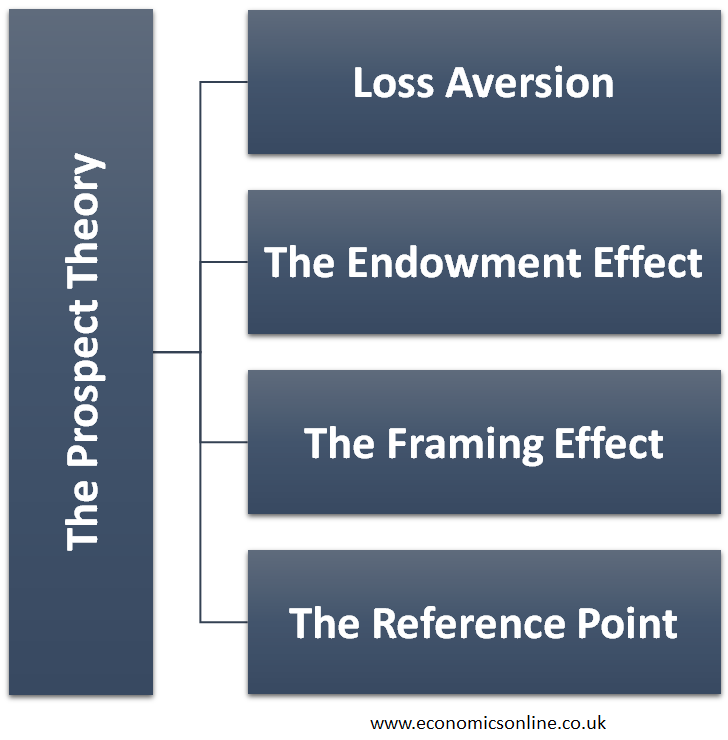 Gain frames and loss frames produce measurably different response rates even when the underlying offer is identical. Testing both frames across audience segments and funnel stages - rather than defaulting to one - is where most copywriting leverage lives. Source: Economics Online
What Marketers Get Wrong
Defaulting to One Frame for Everything
Most brands pick a voice and stick to it rigidly. The result: they’re leaving conversions on the table because different audiences respond to different frames.
Early-stage awareness content benefits from gain frames (aspirational, positive). Consideration and conversion content often benefits from loss frames (what you’re losing by not acting).
Ignoring the Context Frame
Framing isn’t just about your copy. It’s about the entire context in which your message appears.
An ad that appears after a competitor’s ad will be evaluated differently than the same ad appearing first. A price shown after a higher anchor feels like a deal. The same price shown first with no reference feels expensive.
Control the context wherever you can.
Inconsistent Frames Across Touchpoints
If your ads promise transformation (gain frame) but your landing page talks about avoiding problems (loss frame), the cognitive dissonance reduces trust and conversion.
Pick a frame that fits the product, audience, and stage - then be consistent across touchpoints.
NateCue Take
I’ve reviewed hundreds of Vietnamese brand campaigns and the vast majority use implicit framing without knowing it - and they’re using it inconsistently.
Here’s the thing that surprised me when I went through this material: framing is not just a copywriting trick. It’s a fundamental design decision. Your pricing page design is a frame. Your hero image is a frame. The order in which you present your features is a frame.
The most powerful realization: you can A/B test frames without changing your product, your price, or your offer at all. Just change how you present the same information.
For Vietnamese marketers: I’ve seen loss frames work particularly well in categories like insurance, health products, and security tools. Gain frames dominate in aspirational categories - fashion, travel, premium food. But don’t assume - test.
The Framing Effect is free. The only cost is the willingness to write your message two ways and see which one wins.
Frequently Asked Questions
What is the best example of the framing effect in marketing?
The “95% fat-free” vs “5% fat” yogurt example is the clearest illustration - identical product, measurably different purchase intent and even taste perception. For a pricing example, The Economist’s three-tier subscription design (documented by Dan Ariely in Predictably Irrational) shows how a reference point option can shift 52% more customers to a higher-value tier without changing any prices.
When should you use a gain frame vs a loss frame?
Gain frames work better at the awareness and consideration stages, when the audience is exploring options and in a neutral-to-positive emotional state. Loss frames work better at the conversion stage and for risk-mitigation purchases (insurance, security, health). A practical rule: if the product solves a problem the customer already feels, use a loss frame. If the product is aspirational, use a gain frame. When in doubt, test both.
Is the framing effect ethical to use in marketing?
Yes - framing is unavoidable, not manipulative. Every communication presents information in some frame. The question isn’t whether to use framing, but whether you’re framing accurately. “95% fat-free” is a true statement. Framing that misrepresents facts or exploits psychological vulnerabilities is unethical; choosing the most resonant true framing of your offer is simply good communication.
How does the framing effect connect to pricing strategy?
Deeply. Anchor pricing (showing a higher price before your real price), price chunking (“just 100K/month” vs “1.2M/year”), percentage vs absolute savings, and decoy pricing all operate on framing. The reference point you establish - whether a competitor’s price, a “regular” price, or a per-unit breakdown - determines how customers evaluate your price before they even think about value. Control the reference point, and you control how “expensive” you appear.
TL;DR
- The framing effect: decisions change based on how options are presented, not just what they are
- Proven by Kahneman & Tversky’s Asian Disease Problem (1981) - same outcomes, opposite decisions with different frames
- Gain frames emphasize what you get; loss frames emphasize what you avoid losing
- Loss frames often outperform gain frames due to loss aversion - but test for your specific context
- Key techniques: gain/loss flip, reference point anchoring, percentage vs. absolute, time-chunking, social proof framing
- The frame isn’t just copy - it’s design, pricing presentation, and context
Related
- Bandwagon Effect: Why 'Everyone's Doing It' Is Your Most Powerful Marketing Signal
- FOMO in Marketing: Why Fear Drives More Purchases Than Discounts
- Mere Exposure Effect: The Neuroscience Behind Why Familiar Brands Win
- Perceived Value in Marketing: The Psychology Behind Willingness to Pay
Part of the NateCue Marketing Psychology Series - applying consumer psychology to real marketing decisions.