
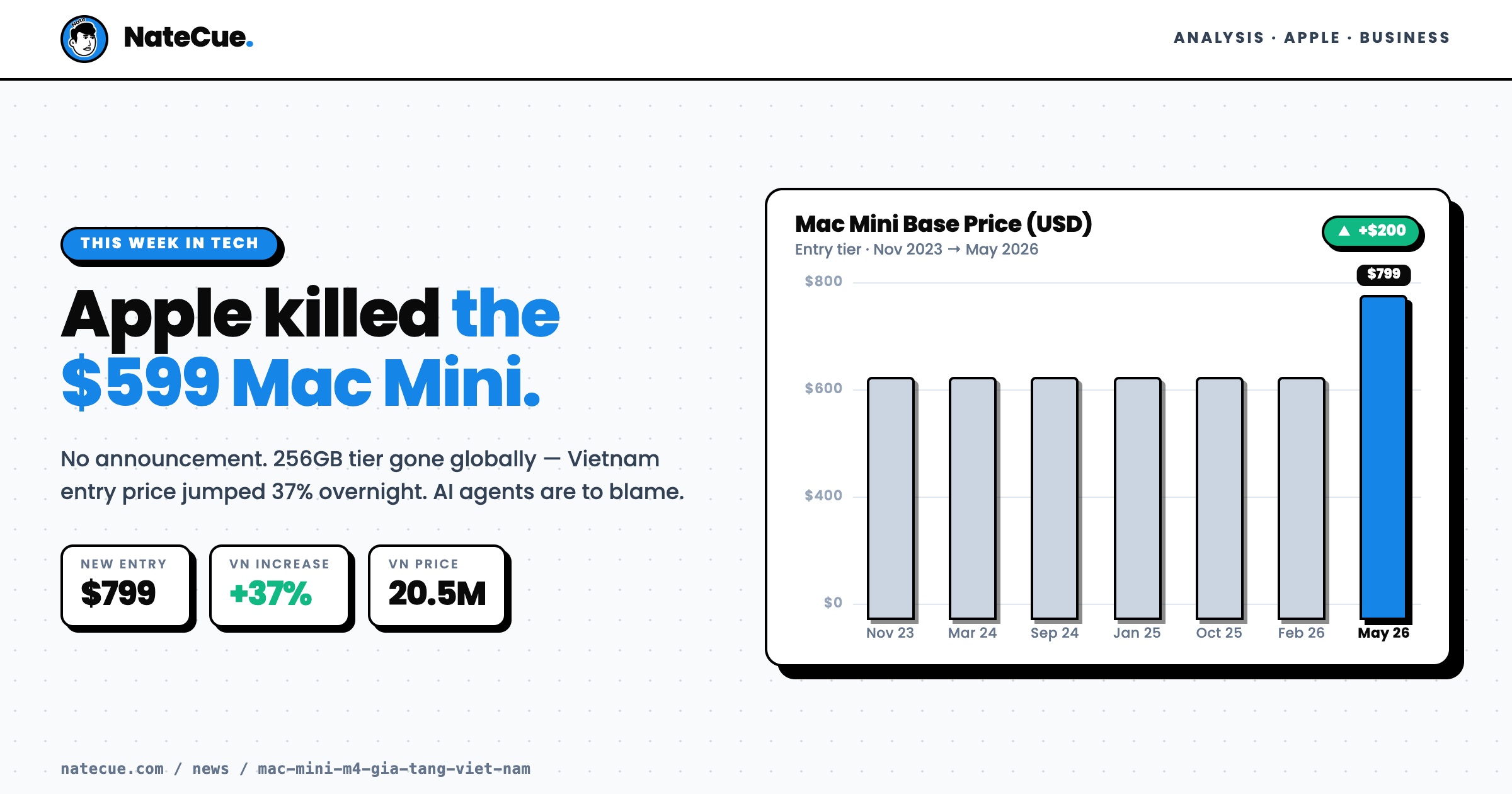
No email. No press release. On May 3, 2026, the Mac Mini M4 256GB simply disappeared from Apple’s online store in Vietnam. The entry price jumped from 15 million to 20.5 million VND - a 37% increase overnight (ZNews, 2026).
Users noticed when they tried to order.
What Actually Happened
Apple didn’t raise the price of the 512GB model. They deleted the cheapest one.
The Mac Mini M4 previously had two entry configurations: 256GB (15M VND / $599 USD) and 512GB (20.5M VND / $799 USD). The 256GB tier is now gone - not just in Vietnam, but globally. In the US, that’s a $200 jump on the entry price, or 33% (9to5Mac, 2026).
The US saw this a week earlier. Vietnam followed.
Authorized retailers still hold some 256GB units in stock at the old price. Once those sell through, 20.5M VND is the new floor.
AI Agents Ate the Inventory
During Apple’s Q2 2026 earnings call, CEO Tim Cook was unusually direct: “Both of these are amazing platforms for AI and agentic tools and the customer recognition of that is happening faster than what we had predicted - and so we saw higher than expected demand.”
Translation: Apple miscalculated.
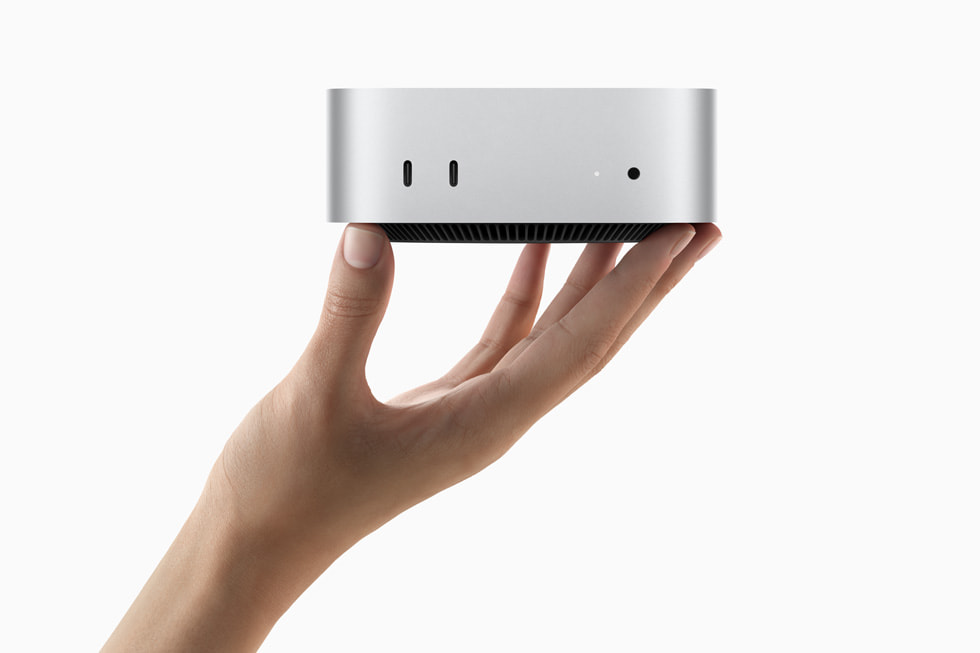
The Mac Mini M4 - with its 16GB unified memory and compact form factor - has become the go-to local AI inference machine for developers, researchers, and AI-forward teams. Running small LLMs offline, testing agentic workflows, building personal automation stacks. This buyer segment doesn’t negotiate on price. They need the machine, and they buy.
The result: across most Mac Mini and Mac Studio configurations, Apple’s website is showing 10-12 week delivery windows. Several 32GB M4 configurations are marked “currently unavailable.” Cook acknowledged it could take “several months” to reach supply-demand balance (MacRumors, 2026).
A Pattern, Not an Anomaly
This isn’t an isolated case.
In March 2026, Apple discontinued the Mac Studio 512GB RAM tier - the highest-end Studio configuration - citing the same combination of memory chip shortage and unexpectedly strong AI-driven demand. Apple Q2 2026 revenue came in at $111 billion, with Mac growing - but also the most supply-constrained product line in the portfolio.
The pattern is clear: when Apple can’t fill supply, they eliminate the SKUs they can least afford to stock.
What This Means for Vietnam and Southeast Asia
In Vietnam, 20.5 million VND is a meaningful psychological threshold. The gap from 15M to 20.5M isn’t just 37% - it crosses the line between “expensive but reachable” and “professional equipment budget.”
Many Vietnamese developers and tech freelancers had been using the base Mac Mini as their primary workstation - and increasingly, as a local AI compute node for client work. The 256GB entry point at 15M VND was the most accessible path into Apple’s ecosystem for this segment.
That path is now closed.
Authorized retailers like FPT Shop and CellphoneS still hold old-price 256GB units. That’s the last window. When stock clears, the new entry is 20.5M - no exceptions.
The deeper implication: for the first time, a Mac price floor has been reset not by inflation, standard product cycles, or exchange rate pressure - but by AI adoption from a segment that was barely on Apple’s radar two years ago.
NateCue's Take
This isn't a pricing story. It's a product category story. The Mac Mini is quietly becoming a local AI compute node - not a budget desktop. The buyers clearing inventory are developers, researchers, and early-stage teams running local LLMs and agentic workflows on unified memory. They're less price-sensitive than traditional Mac buyers. Apple erased the $599 tier not to extract more margin, but because that SKU was being consumed by a demand profile it wasn't designed for. For Southeast Asia markets like Vietnam, the gap from $370 to $500 (rough VND equivalent) is a real adoption barrier. The freelancers and indie devs who would have used the base model as their first Apple Local AI machine are now priced out. That's a segment Apple may underestimate - the grassroots AI builder community in emerging markets tends to punch above its weight on influence.