
Apple just admitted something the entire tech industry already knew: Siri couldn’t keep up with ChatGPT.
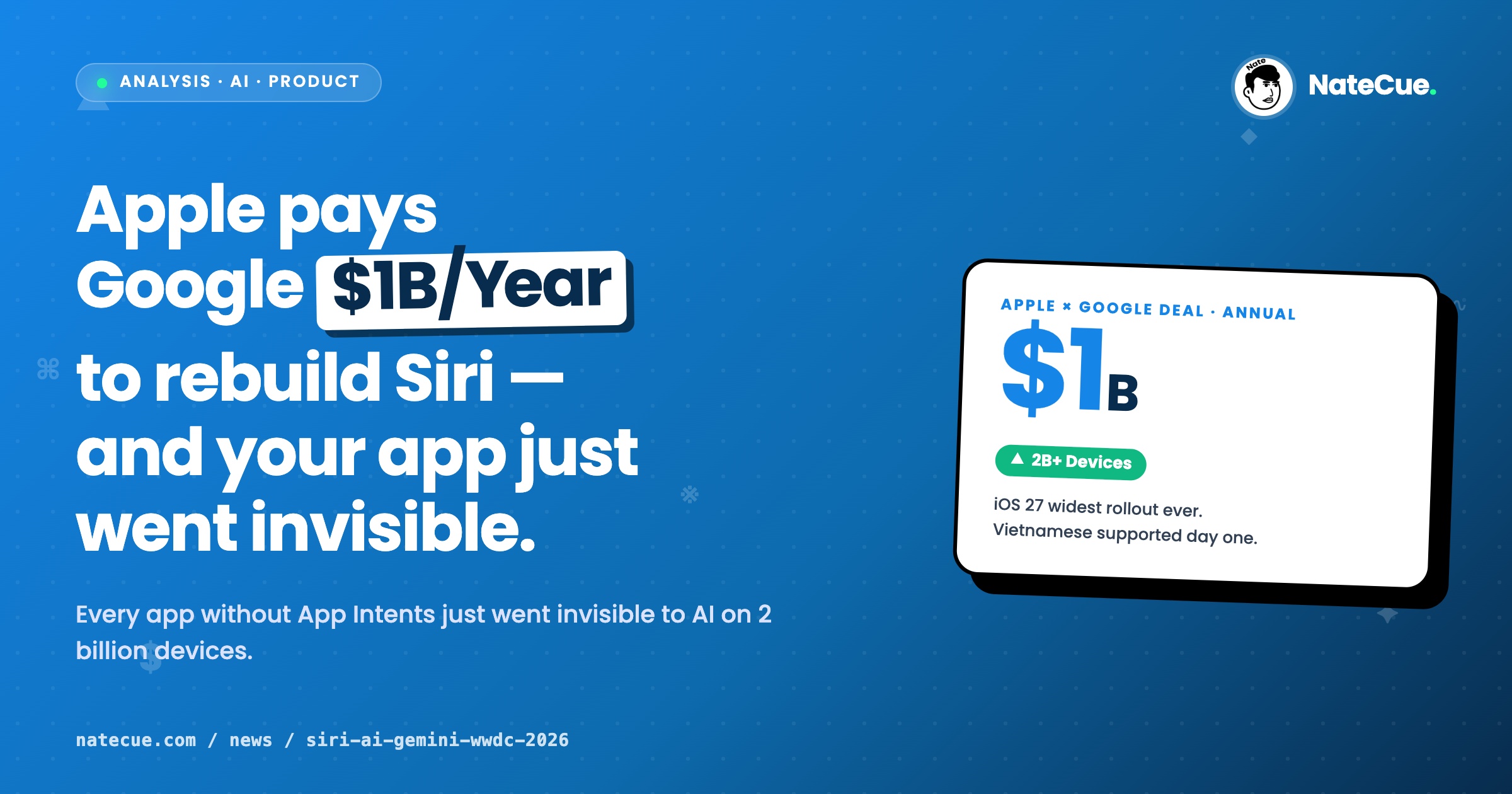
Their solution? Pay a direct competitor $1 billion a year.
Gemini Now Powers Siri
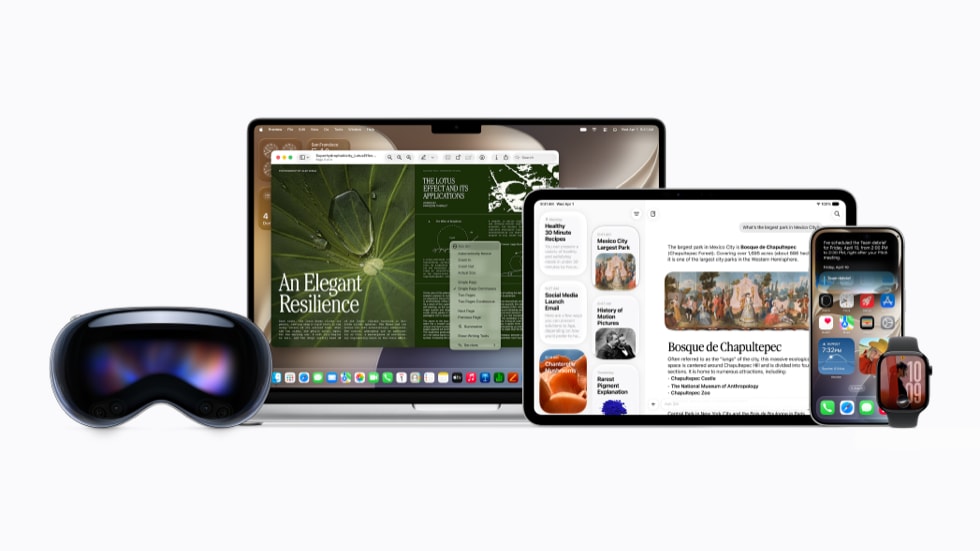
At WWDC 2026 on June 8, Apple unveiled Siri AI - a completely rebuilt assistant running on Google’s custom Gemini model (~1.2 trillion parameters). It marks the first time in Apple’s history that a direct competitor’s AI powers a flagship Apple product.
The reported $1 billion annual license fee isn’t a routine integration deal. It’s Apple betting that protecting user experience matters more than building every layer in-house.
The new Siri AI can:
- Maintain multi-turn conversational context across a session
- Pull personal context from Messages, Mail, and Photos to answer complex questions
- Chain actions across multiple apps in a single request
- Support Vietnamese from day one - alongside 14 other languages at launch
iOS 27 with Siri AI will reach iPhone 11 and newer. Apple called it “more users than any iOS release in history.”
Users Now Choose Their AI Model
Less covered, but more important for marketers: Apple introduced an Extensions system that lets users pick which AI model powers Apple Intelligence features.
Three options ship from day one: Google Gemini (default for Siri), ChatGPT from OpenAI, and Claude from Anthropic.
This is the first time “which AI do you prefer?” becomes a meaningful question for everyday consumers - not just developers. When AI model becomes brand preference, the competition between Anthropic, OpenAI, and Google moves onto a new battlefield: consumer mindshare on 2 billion Apple devices.
For marketers building AI-powered products: the way you talk about which AI your product uses just got more consequential. Users have opinions now.
App Intents: The Deadline Nobody’s Talking About
This is the most important WWDC 2026 news for app marketers - and the least covered.
Apple formally deprecated SiriKit at WWDC 2026. The old framework dies within 2-3 years. The mandatory replacement is App Intents - a new Swift-based framework that explicitly defines what your app can do for AI.
The direct impact: apps without App Intents become invisible to Siri AI.
Not reduced visibility. Invisible. Siri AI has the reasoning capacity to chain actions across apps - but it can only “see” apps through intent definitions. No App Intent declaration = your app doesn’t exist to the AI.
With iOS 27 shipping fall 2026, the migration clock started June 8 (TechTimes). The 2-3 year window sounds long - but early adopters gain Siri placement from day one. Late movers wait years to recover lost ground.
The Vietnam Angle: First-Mover Window
Apple holds 20% of Vietnam’s smartphone market - second only to Samsung at 26%, ahead of Xiaomi at 18%. iOS penetration in Vietnam leads Southeast Asia at 13.7%.
Vietnamese is a day-one supported language for Apple Intelligence. This isn’t a “coming later” feature for Vietnam. When iOS 27 launches in fall 2026, millions of Vietnamese iPhone users get full Siri AI functionality immediately.
Most Vietnamese apps aren’t ready. SiriKit was complex and frequently skipped by dev teams. App Intents is cleaner to implement - but it still requires deliberate engineering work. The 6-12 month window before iOS 27 reaches full adoption is the opportunity. Whoever builds App Intents first wins Siri search first, in a market where the competition hasn’t woken up yet.
An Era Shift - Not Just a Product Update
WWDC 2026 was also Tim Cook’s final keynote as CEO. John Ternus, SVP of Hardware Engineering, takes over the CEO role on September 1, 2026.
The combination of Siri AI + App Intents + the Extensions model points in one direction: Apple is building the third major AI platform. Not Google Search. Not ChatGPT. A native AI layer on top of a device ecosystem that users already trust for privacy.
For app marketers, the question shifts from “does AI matter for my app?” to “is my app visible to AI?”
For most apps right now: the answer is no.
NateCue's Take
The scariest thing from WWDC 2026 isn't that Siri got smarter. It's that Apple quietly rewrote the rules of app discovery. Traditional ASO optimizes for App Store keyword ranking. Siri AI powered by Gemini surfaces apps through intent matching - not keyword matching. You can rank #1 in the App Store and still be invisible to the new Siri. The 2-3 year migration window to App Intents sounds generous - but the fall 2026 iOS 27 rollout means the clock started June 8. Vietnam's inclusion as a day-one supported language is the signal: this isn't a US-first feature anymore. Southeast Asian marketers who act now have a rare first-mover window before the market catches up.